The Petronas Twin Towers are often celebrated for their engineering achievements, but equally remarkable is the depth of Islamic artistic tradition embedded in their design. From the eight-pointed-star floor plan to the intricate lobby mosaics, the towers demonstrate that modernist skyscraper design and centuries-old Islamic geometry are not only compatible but mutually enriching.
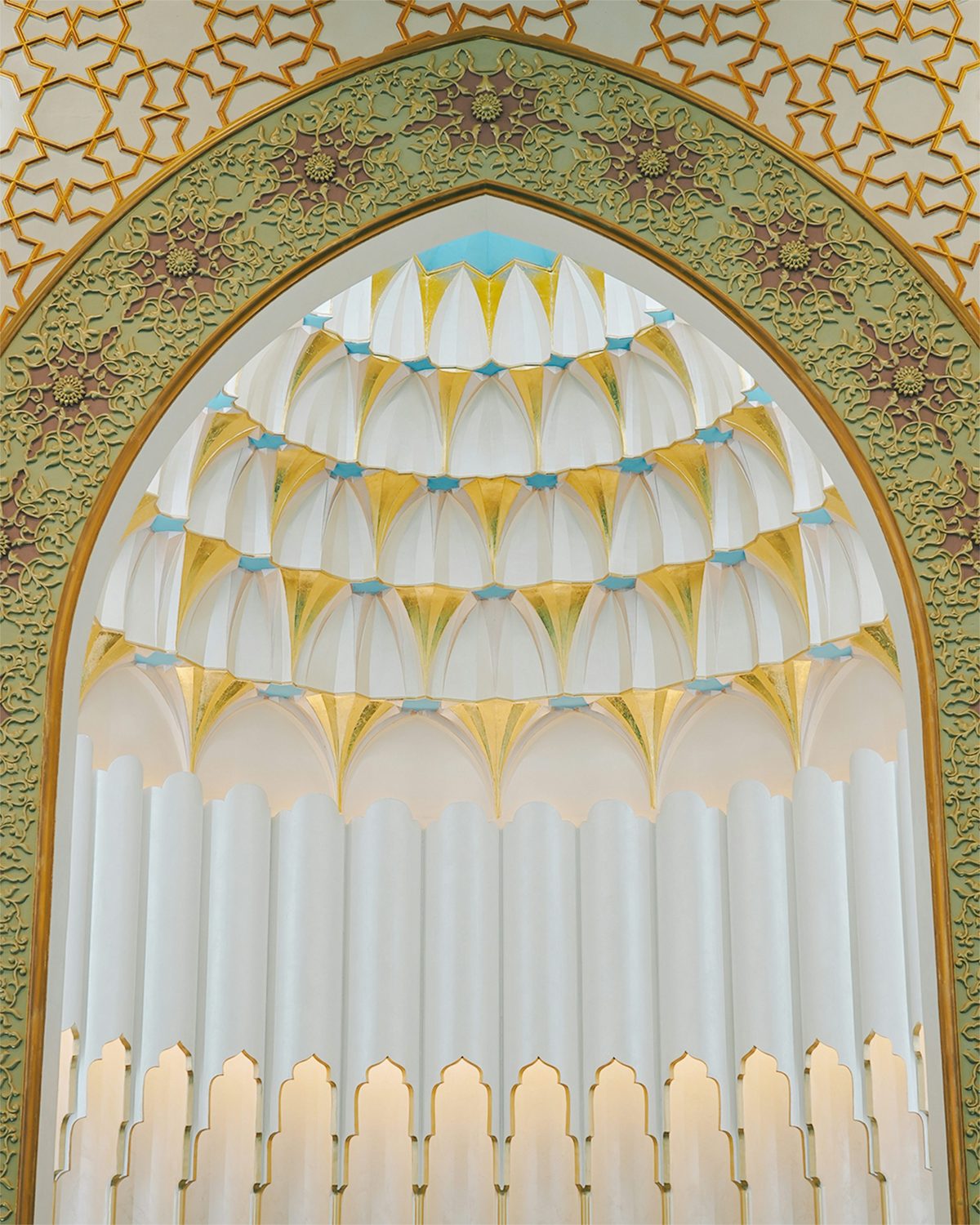
Islamic geometric art transforms flat surfaces into mesmerising displays of mathematical harmony.
Islamic Design Principles
Islamic art has long favoured geometric abstraction over figurative representation, resulting in one of the richest traditions of pattern-making in world culture. Fundamental principles include infinite repetition (suggesting the boundlessness of creation), radial symmetry, and the interplay of positive and negative space. Artists and architects construct complex patterns from a small set of base shapes — circles, squares, hexagons, and stars — which are tessellated, rotated, and overlaid to produce dazzling visual effects.
These principles transcend mere decoration. In Islamic philosophy, geometric perfection reflects divine order. A mosque's muqarnas vault or a madrasa's tile panel is not simply ornamental; it is a meditation on the underlying structure of the cosmos. César Pelli drew on this tradition deliberately, seeking to ground his modern skyscraper in a cultural language that Malaysians would recognise and cherish.
The Eight-Pointed-Star Floor Plan
The single most distinctive feature of the Petronas Towers' design is the floor plate, formed by superimposing two rotated squares to create an eight-pointed star — the Rub el Hizb, a motif ubiquitous in Islamic art and calligraphy. Pelli augmented this star with semicircular arcs at each of the eight re-entrant angles, softening the silhouette and creating small bays that serve as corner offices with panoramic glazing.
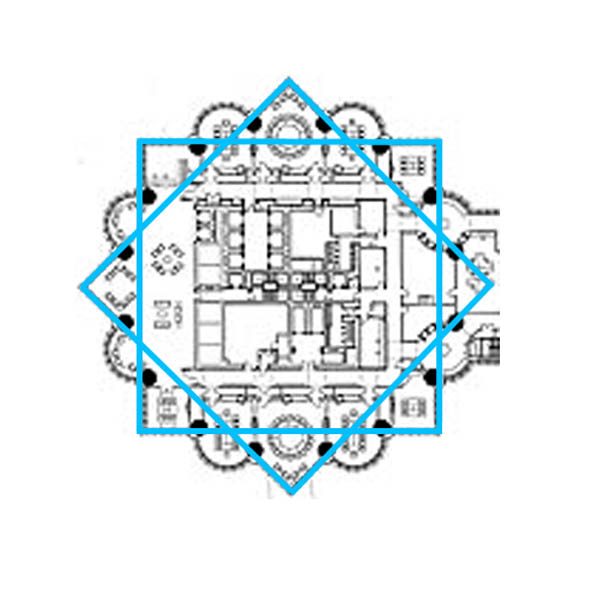
The floor plan's geometric derivation: two overlapping squares generate the iconic eight-pointed star.
The resulting shape is both structurally efficient — its deep lobes provide natural moment resistance against wind loads — and culturally resonant. Viewed from above, the towers' footprint echoes patterns found in mosque domes, Quran illuminations, and traditional Malay woodcarving. It is a floor plan that could exist nowhere else in the world, rooting the towers firmly in their geographic and spiritual context.
Geometric Motifs Throughout the Towers
The Islamic design language extends far beyond the floor plan. The towers' curtain wall features stainless-steel mullions arranged in patterns that subtly recall arabesque tracery. The spandrel panels between floors incorporate geometric rosettes that catch and reflect sunlight, creating a shimmering effect that changes throughout the day.
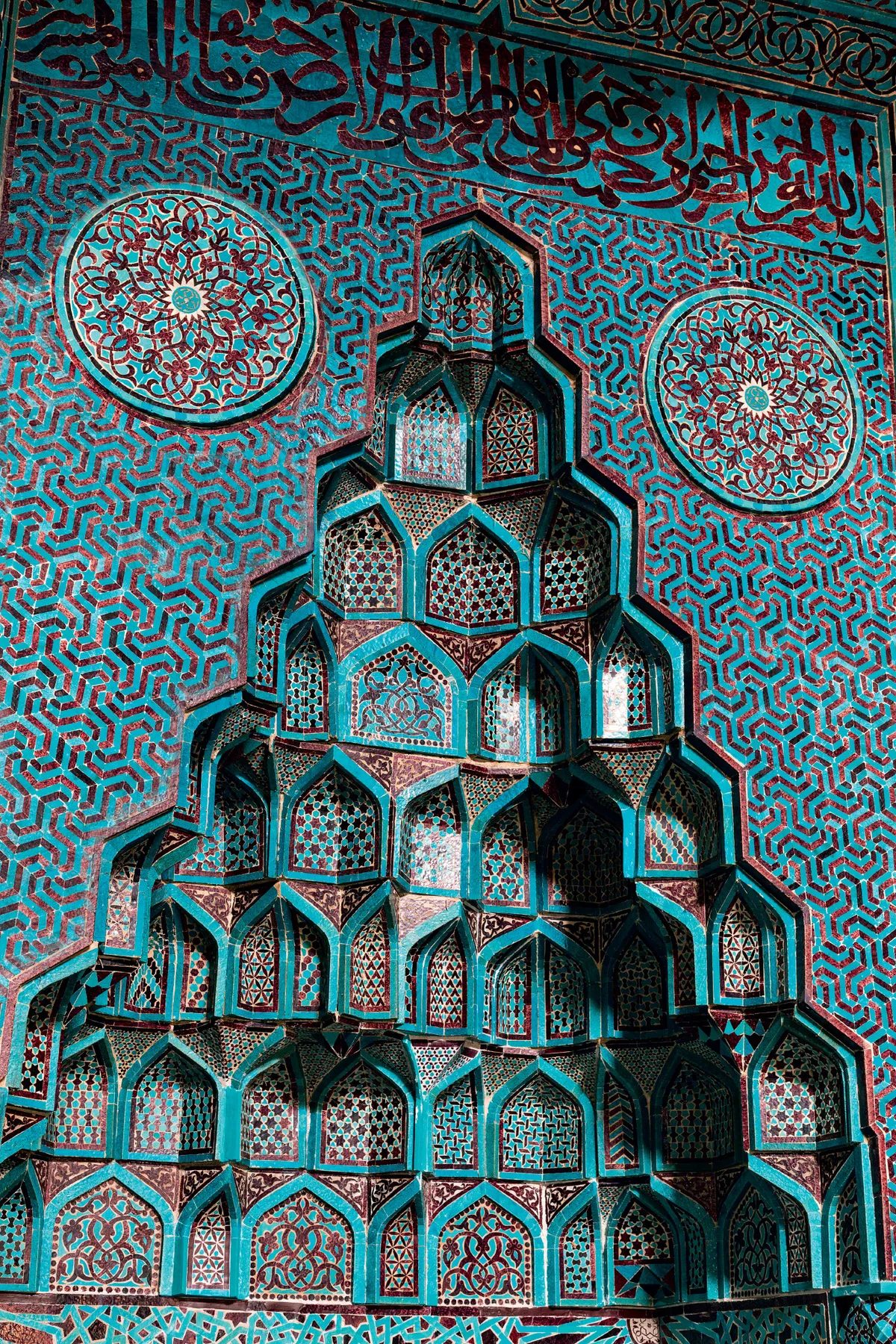
Traditional Islamic mosaics like this one inspired the patterns found in the towers' lobbies and public spaces.
Inside, the lobbies are masterpieces of applied Islamic art. Floors are paved with hand-cut marble in interlocking star-and-cross patterns sourced from Italian quarries and assembled by Malaysian artisans. Wall panels feature stainless-steel screens with laser-cut geometric fretwork that filters natural light into kaleidoscopic patterns on the polished stone floors. Ceiling coffers echo the eight-pointed star of the floor plan in miniature, creating a sense of fractal repetition — one of the hallmarks of classical Islamic design.
Cultural Significance
For Malaysia's Muslim-majority population, the towers' Islamic geometry carries deep emotional and spiritual significance. The buildings are frequently cited in Friday sermons and educational materials as evidence that Islamic civilisation's contributions to mathematics, astronomy, and architecture remain relevant in the contemporary world. Schoolchildren learn about the Rub el Hizb using the Petronas Towers as a case study, connecting abstract geometry to a building they can visit and touch.
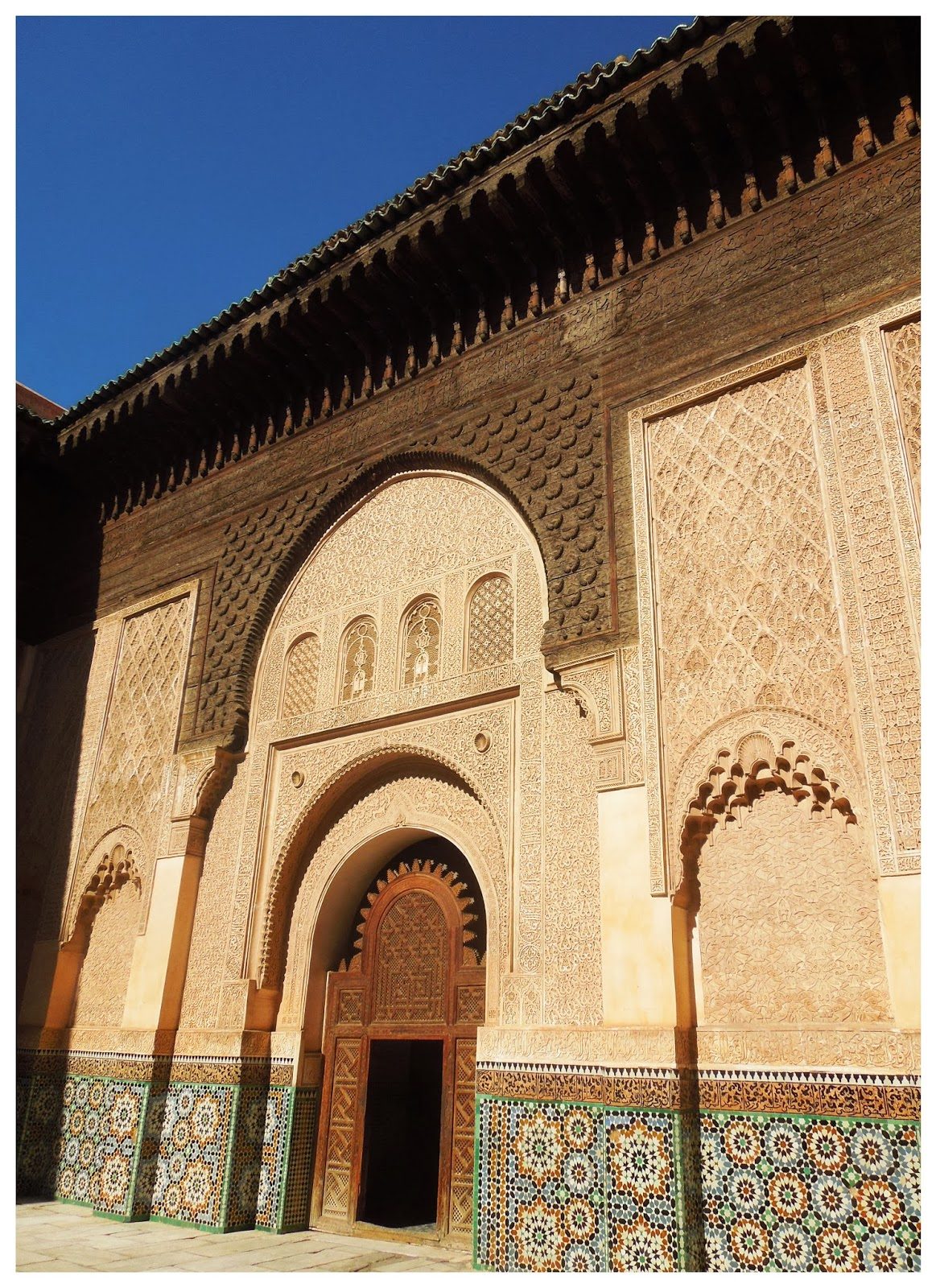
Traditional Islamic doorways demonstrate the same geometric principles that inform the towers' design.
The choice of Islamic motifs was also a diplomatic statement. By the early 1990s, Malaysia was positioning itself as a moderate, modern Muslim nation — a bridge between the Islamic world and the global economy. A pair of skyscrapers grounded in Islamic geometry sent a powerful message: that Muslim-majority countries could embrace technological modernity while honouring their cultural heritage.
How Islamic Architecture Influenced the Structure
It would be a mistake to view the Islamic elements as applied decoration over a standard steel frame. The geometry actively shaped the structure. The eight-lobed floor plan distributes wind forces more evenly than a simple rectangular or circular plan, reducing the size of the structural core needed for lateral resistance. The tapered profile — each tower steps inward at several points as it rises — mirrors the proportional systems used in Islamic minarets and dome drums, where slender forms emerge from broader bases through a series of geometric transitions.
Even the sky bridge's proportions were influenced by Islamic concepts of bilateral symmetry and the idea of a threshold — the space between two sacred pillars through which one passes from the mundane world into an elevated realm. Whether or not visitors consciously perceive these references, the sense of awe and transcendence reported by millions of skybridge visitors owes something to these deeply embedded design principles.
Design References at a Glance
Floor plan: Rub el Hizb (eight-pointed star) · Lobby floors: Hand-cut marble star-and-cross pattern · Wall screens: Laser-cut stainless-steel arabesque · Curtain wall: Geometric rosette spandrels · Ceiling coffers: Miniature eight-pointed stars · Inspiration sources: Malay woodcarving, songket weaving, mosque tilework