César Pelli shaped skylines across four continents during a career spanning more than five decades. Yet no project defined his legacy quite like the Petronas Twin Towers — the commission that placed both the architect and Malaysia on the global architectural map. His ability to blend cultural sensitivity with bold modernism produced a landmark that remains the tallest twin structures on Earth almost three decades after completion.
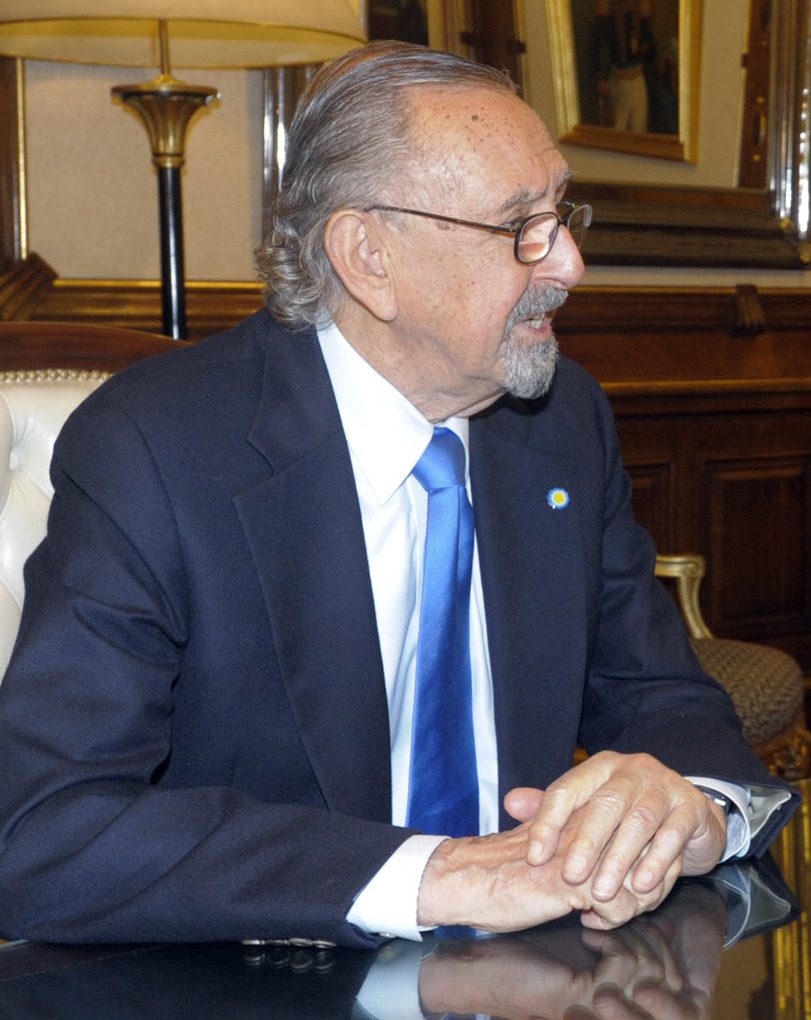
César Pelli (1926–2019), one of the most influential architects of the late twentieth century.
Early Life and Education
Born on 12 October 1926 in San Miguel de Tucumán, Argentina, Pelli developed a fascination with buildings while exploring the colonial churches and art-deco cinemas of his hometown. He studied architecture at the Universidad Nacional de Tucumán, graduating in 1949 with top honours. Eager to broaden his horizons, he won a scholarship to the University of Illinois at Urbana-Champaign, where he earned a master's degree in 1954.
The move to the United States proved transformative. Pelli joined the studio of Eero Saarinen in Bloomfield Hills, Michigan, working on landmark projects such as the TWA Flight Center at JFK Airport and the Morse and Stiles Colleges at Yale University. Saarinen's commitment to expressive form and contextual design would profoundly influence Pelli's own philosophy.
A Career of Landmark Buildings
After Saarinen's death in 1961, Pelli moved to Los Angeles, eventually joining Daniel, Mann, Johnson & Mendenhall (DMJM) before becoming a partner at Gruen Associates. It was at Gruen that he designed the Pacific Design Center in West Hollywood — a daring, cobalt-blue glass building that earned both controversy and acclaim, establishing Pelli as a designer willing to make bold statements with colour and material.
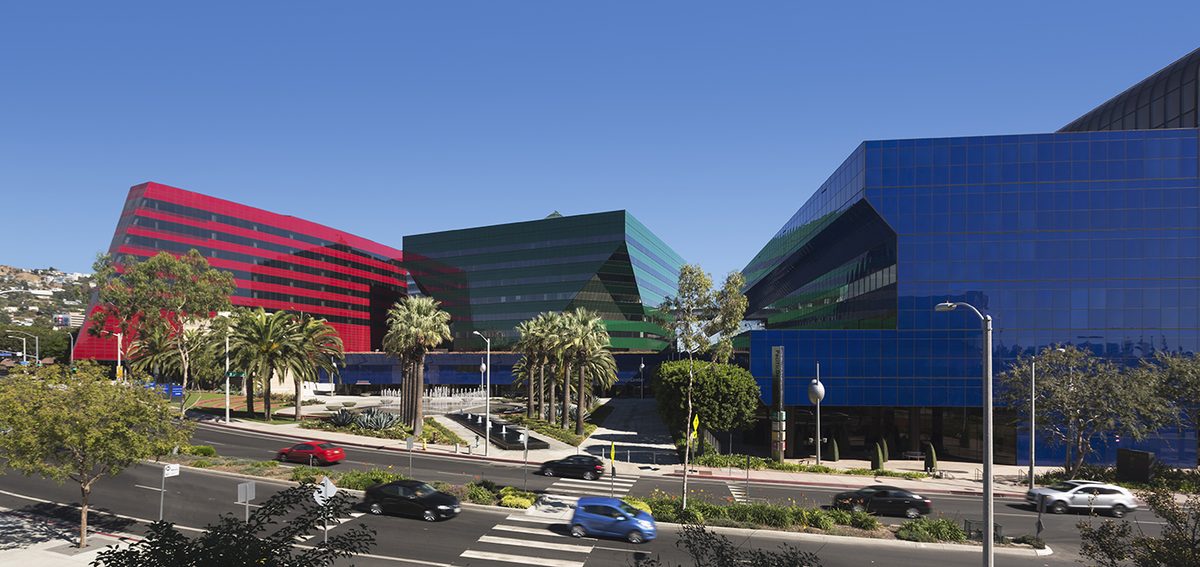
The Pacific Design Center in West Hollywood — one of Pelli's most recognisable early works.
In 1977, Yale University appointed Pelli as Dean of the School of Architecture, a position he held for seven years. That same year he founded César Pelli & Associates (later Pelli Clarke & Partners) in New Haven, Connecticut. The firm grew rapidly, fuelled by commissions that ranged from the Museum of Modern Art expansion tower in Manhattan to the World Financial Center overlooking the Hudson River.
Other notable projects include the International Finance Centre in Hong Kong, the National Museum of Art in Osaka, the Adrienne Arsht Center for the Performing Arts in Miami, and Salesforce Tower in San Francisco. Each project demonstrated Pelli's conviction that a building must respond to its specific place, climate, and cultural context rather than imposing a single stylistic signature.
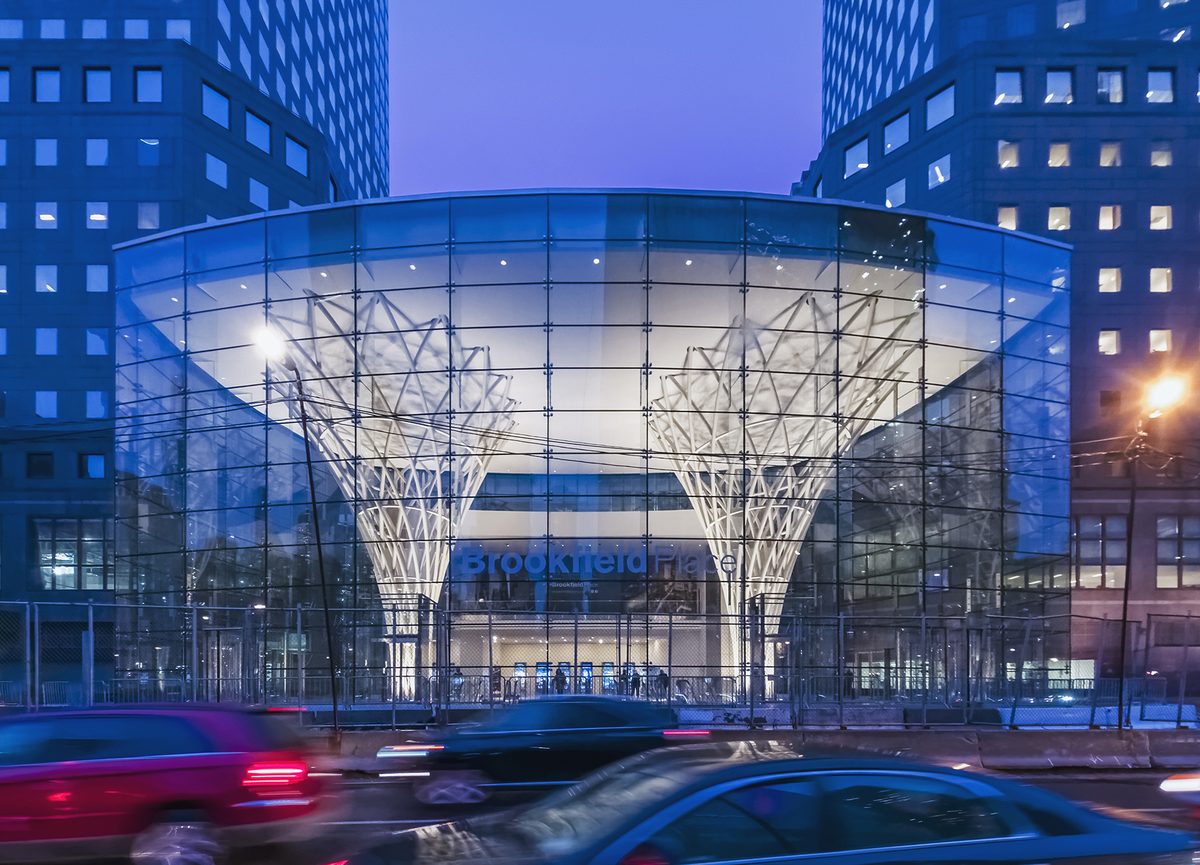
Brookfield Place (formerly World Financial Center) in Lower Manhattan, another Pelli masterpiece.
Vision for the Petronas Towers
When Malaysia launched its international design competition for the Kuala Lumpur City Centre in 1991, Pelli saw an opportunity to create something unprecedented. Rather than proposing a generic glass box, he drew on Islamic geometric traditions — specifically the eight-pointed star, or Rub el Hizb — to craft a floor plan that felt distinctly Malaysian. Two interlocking squares created a shape with semicircular bays at the junctions, producing a plan that maximised corner offices and panoramic views while evoking centuries of Islamic art.
"I wanted a building that was of its place, not something you could pick up and drop in Houston or London. The geometry had to speak the language of Malaysian culture." — César Pelli
Pelli proposed twin towers rather than a single supertall structure, arguing that the pairing would create a more dramatic gateway and a stronger urban presence. He connected them with a sky bridge at levels 41 and 42, a bold engineering gesture that had never been attempted at such a height. The towers' tapered silhouette, with stepped setbacks that diminish towards the pinnacles, draws on traditional Malaysian metalwork and temple profiles.
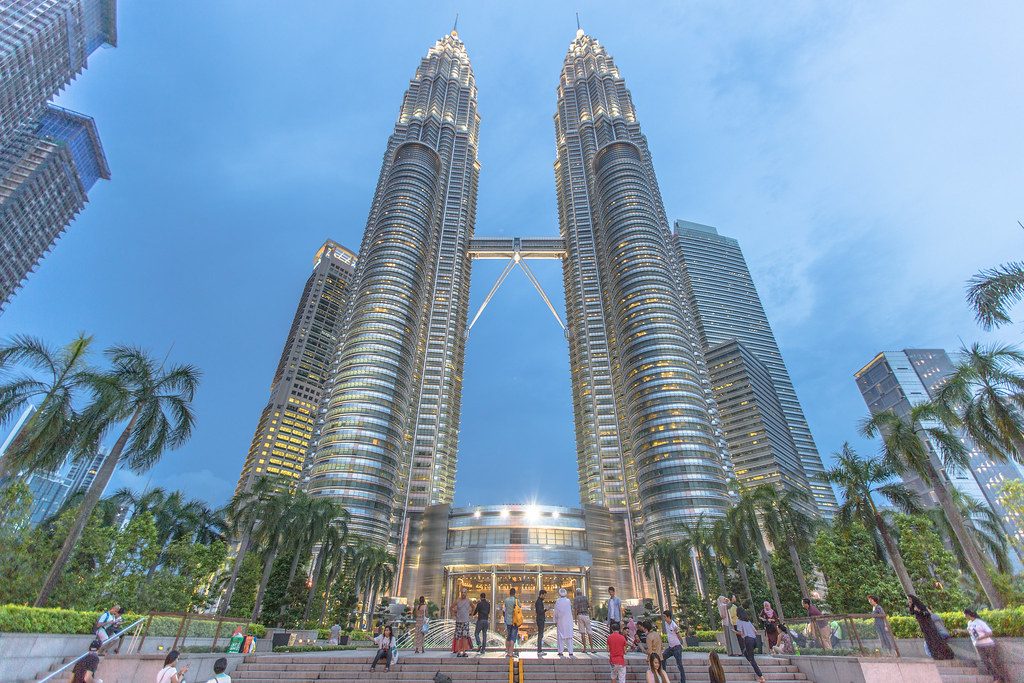
The completed Petronas Twin Towers — Pelli's vision realised in steel, glass, and concrete.
The selection committee unanimously chose Pelli's design in January 1992. Over the next six years, Pelli and his team worked closely with structural engineers Thornton Tomasetti and local collaborators to refine every detail, from the stainless-steel-and-glass curtain wall to the intricate lobby patterns inspired by songket weaving. The result was a 451.9-metre masterpiece that held the title of world's tallest building from 1998 to 2004.
Architectural Philosophy
Throughout his career, Pelli championed what he called "firmness, commodity, and delight" — echoing the Vitruvian ideals of structural integrity, functional adequacy, and aesthetic beauty. He rejected the notion of a signature style, arguing that every building should be a fresh response to its programme, site, and community. This contextual approach meant that a Pelli building in Tokyo looked fundamentally different from one in Miami, yet both shared an underlying commitment to elegance and restraint.
Pelli was also deeply interested in the civic role of architecture. He believed that major buildings carried a responsibility to enrich public life, whether through generous plazas, welcoming lobbies, or facades that engaged the streetscape. The Petronas Towers exemplify this philosophy: the 50-acre KLCC Park at their base, the publicly accessible Skybridge, and the cultural venues within the podium all serve the broader community, not just the corporate tenants above.
Legacy and Honours
Pelli received virtually every major honour the profession bestows. He was awarded the AIA Gold Medal in 1995, the same year the Petronas Towers were topped out. The American Institute of Architects named him one of the ten most influential living American architects in 1991. He also received the Aga Khan Award for Architecture for the Petronas Towers in 2004 — a recognition of the project's cultural sensitivity and Islamic design heritage.
César Pelli passed away on 19 July 2019 at the age of 92 in New Haven, Connecticut. His firm, now led by partners Fred Clarke and Rafael Pelli (his son), continues to produce distinguished work under the name Pelli Clarke & Partners. But it is the twin silhouettes rising above the Kuala Lumpur skyline that remain his most enduring gift to architecture — a building that bridged East and West and proved that skyscrapers could be culturally rooted as well as technologically daring.
Key Facts — César Pelli
Born: 12 October 1926, San Miguel de Tucumán, Argentina · Died: 19 July 2019, New Haven, Connecticut · Education: Universidad Nacional de Tucumán; University of Illinois · Notable works: Petronas Twin Towers, Pacific Design Center, World Financial Center, International Finance Centre Hong Kong · Awards: AIA Gold Medal (1995), Aga Khan Award (2004)