Buildings are rarely just buildings. The Petronas Twin Towers have, since their completion in 1998, transcended their function as office space to become one of the most potent cultural symbols in Southeast Asia. They appear on banknotes, in blockbuster films, on airline tail fins, and in the hearts of Malaysians as the definitive emblem of their nation's ambition and identity.
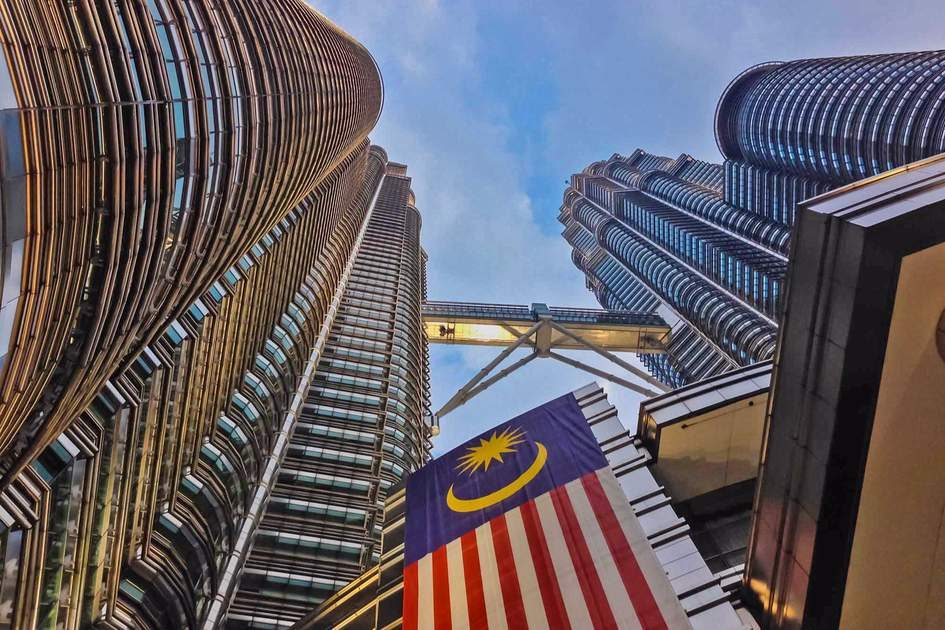
The Jalur Gemilang alongside the towers — an image that encapsulates modern Malaysian identity.
Impact on Malaysian National Identity
For a young, multiethnic nation that gained independence only in 1957, national symbols carry extraordinary weight. Before the towers, Malaysia's most recognisable landmarks were colonial-era structures — the Sultan Abdul Samad Building, the Kuala Lumpur Railway Station — that evoked the British imperial past rather than an independent future. The Petronas Twin Towers gave Malaysia something entirely its own: a modern, self-commissioned icon built with Malaysian labour, anchored in Islamic geometry, and funded by Malaysian natural resources.
Surveys conducted by the University of Malaya consistently rank the towers as the single most important symbol of Malaysian identity, ahead of the national flag, the national mosque, and even the nation's cuisine. School textbooks devote entire chapters to the towers' construction as a case study in national achievement. For Malaysians living abroad, photographs of the twin spires are a common expression of homesickness and pride.
Symbol of Southeast Asian Development
The towers' completion coincided with — and in some ways catalysed — a broader recognition that Southeast Asia's economic tigers were building world-class infrastructure. Just as the Sydney Opera House gave Australia cultural credibility beyond sport, the Petronas Towers gave Malaysia (and by extension the ASEAN region) architectural credibility beyond manufacturing and commodities.
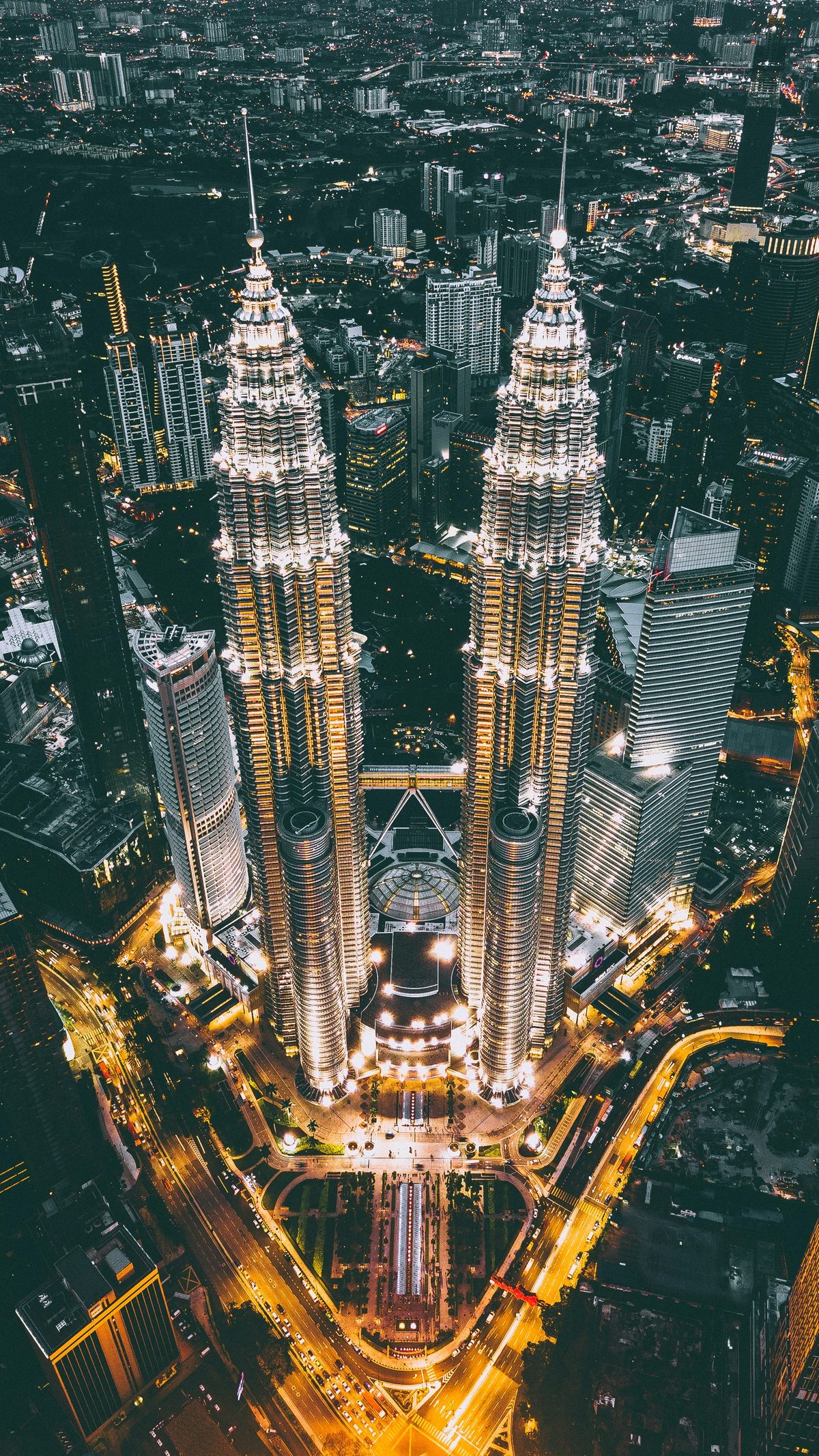
The towers' soaring presence conveys ambition and modernity — qualities that define contemporary Southeast Asia.
The project inspired a wave of ambitious skyscraper construction across the region. Jakarta, Bangkok, Ho Chi Minh City, and Manila all embarked on supertall projects in the 2000s and 2010s, explicitly citing the Petronas Towers as proof that such ventures could succeed in tropical, developing-world contexts. Malaysia itself doubled down with Merdeka 118, completed in 2023, which at 678.9 metres became the tallest building in Southeast Asia — a direct descendant of the ambition the Petronas Towers embodied.
Tourism Impact
The towers transformed Kuala Lumpur's tourism profile almost overnight. Before 1998, KL was primarily a transit stop for travellers heading to Penang, Langkawi, or Borneo. After the towers opened, the city became a destination in its own right. Tourist arrivals to Kuala Lumpur surged from roughly 5 million in 1997 to over 13 million by 2005, with the towers cited as the primary attraction by a significant majority of visitors.
The KLCC precinct — the hotels, the park, the mall, the convention centre — was purpose-built to capture this tourism potential. Today, the economic ripple effects extend far beyond ticket sales: the towers support an ecosystem of tour operators, souvenir vendors, hospitality workers, transportation services, and food outlets that collectively generate billions of ringgit in annual economic activity.
Cultural Events and Celebrations
The towers serve as a backdrop — and increasingly as a canvas — for major cultural events. The New Year's Eve countdown, held in front of the towers with the KLCC Park fountains as a stage, attracts hundreds of thousands of revellers and is broadcast live nationally. National Day celebrations on 31 August feature the towers lit in national-flag colours, with military flyovers and cultural performances in the park below.
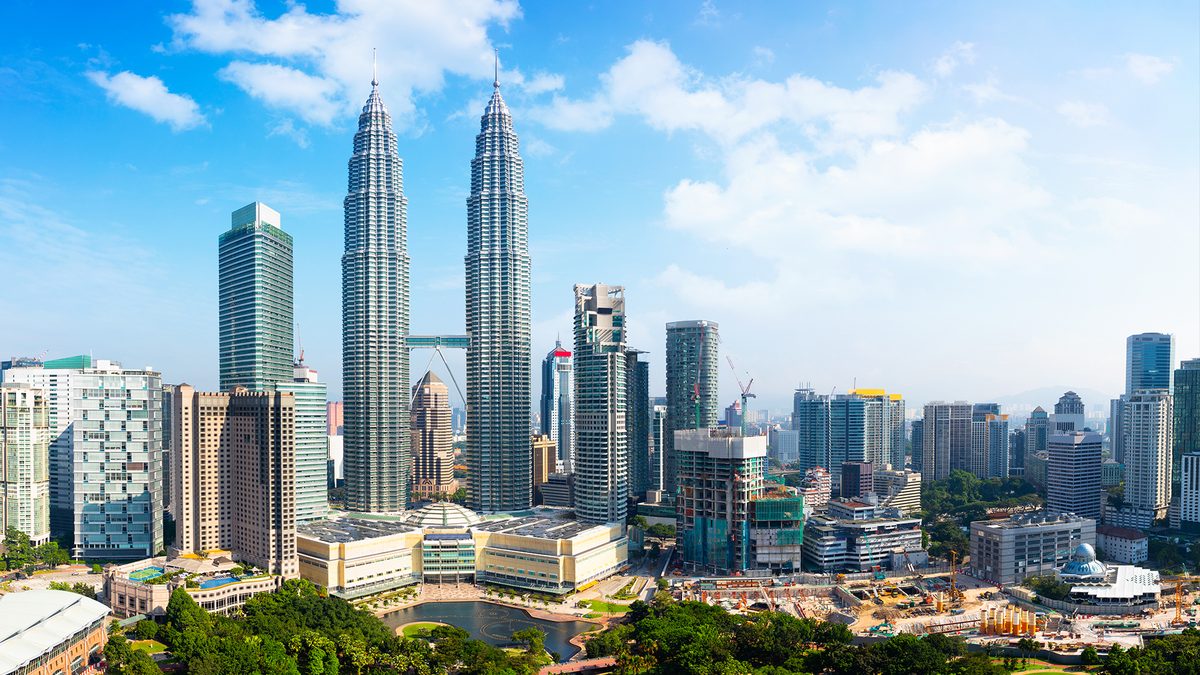
The towers as part of the evolving KL skyline — a symbol of a city constantly reaching higher.
Religious festivals are also marked by themed lighting: green for Hari Raya Aidilfitri, red for Chinese New Year, orange for Deepavali, and white for Christmas — reflecting Malaysia's multicultural fabric. These displays reinforce the towers' role as a unifying national symbol that belongs to all Malaysians, regardless of ethnicity or faith.
Representation in Media and Popular Culture
The Petronas Towers have appeared in numerous films, including Entrapment (1999) starring Sean Connery and Catherine Zeta-Jones, which featured a dramatic heist sequence on the sky bridge. They also feature prominently in Don: The Chase Begins Again (2006) and the animated film Planes (2013). On television, the towers are a staple establishing shot for any programme set in or referencing Malaysia, from The Amazing Race to BBC and CNN travel documentaries.
In literature, the towers appear in Tash Aw's novel Five Star Billionaire and in numerous non-fiction works on modern Asian architecture. Musically, the Malaysian hip-hop scene has adopted the towers as a symbol of national swagger, with artists frequently referencing them in lyrics and music videos. The towers have even inspired a generation of Malaysian architects and engineers, many of whom cite childhood visits to the KLCC precinct as the spark that ignited their career ambitions.
Cultural Impact by the Numbers
Tourist arrivals (KL): 5M (1997) → 13M+ (2005) → 26M+ (2019, pre-pandemic) · Film appearances: 15+ major productions · National Day viewership: ~10 million TV viewers annually · Most recognised Malaysian landmark: #1 in every survey since 2000